News

News2023-11-24T11:31:05+11:00

SWP presents at Senate Estimates Enquiry, Defence Estate Assets Public Hearing

August 25, 2026|Articles, Homepage|

Senate Estimates Enquiry
Management of Defence Estate Assets Public Hearing – Queenscliff
24 August 2026

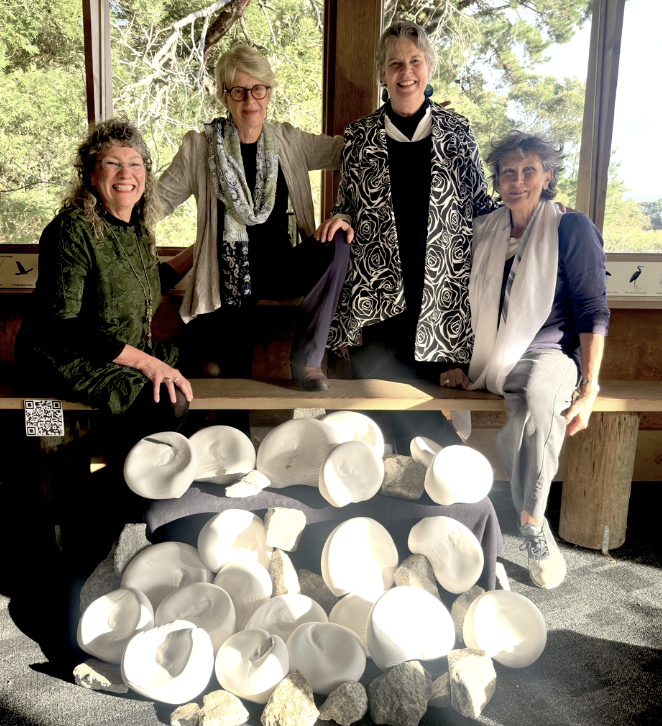
Opening remarks – Jane Carnegie – Save Westernport, photo: Candy Spender

Save Westernport spoke about HMAS Cerberus at the Senate Estimates Committee Hearing (into the divestment of the Defence Estate) at Queenscliff on August 24th 

Hear Jane’s comments in this YouTube recording:   https://www.youtube.com/live/cwtTtzftHqk?t=1188&si=6qDUPU4wiFG4qavf

TRANSCRIPTION:
Thank you for this opportunity to speak to Save Westernport’s Submission to your enquiry.
My name is Jane Carnegie and I am the President of Save Westernport, a not-for-profit community environmental organisation -focused on key environmental issues on the Westernport side of the Mornington Peninsula.
Our key concern for your enquiry is the future of HMAS Cerberus. I will come back to this issue later in my opening remarks.
Firstly, I think it is important for your enquiry to examine what we believe are the systemic issues in this ‘divestment’ process.
These are outlined in some detail in our submission.
They relate to both the audit and its findings and the current process for divestment.
The Defence Estate Audit Report
In relation to the Audit report and government’s endorsement, we focus on 6 key systemic failings.
1. The Terms of Reference for the audit were too narrow and as such drove the approach by the consultants and the final recommendations. The Terms
of Reference ,at a minimum ,should have included an examination of the environmental asset value of the sites earmarked for sale and indigenous heritage and value.
2. The Audit was conducted in secrecy, with no consultation with the community; with the people of Australia. This narrow lens also drove the outcomes. If there had been widespread input from communities, the consultants may have proposed other outcomes and recommendations.
3. The Report is called an audit but our understanding of an audit is that it is either financial in nature or a process, product or system audit conducted in accord with international standards. This audit and its report do not meet these definitions.
4. The Audit did not comprehensively examine and report on the individual proposed sites for divestment. It provided no cogent systematic analysis against specified criteria to determine the basis for divestment, partial divestment or retention. In fact, there was no information of any kind on the designated specific sites. This was a clear failing.
5. Despite the lack of detailed investigation, the Report recommended 32 sites for immediate divestment, with 36 requiring further investigation.
Cerberus was amongst those 36. Yet all 68 sites were recommended for immediate divestment and are part of the current process. There is no rationale, evidence or justification for divestment of all sites.
6. The Report provides no basis for determining the proposed revenue from the sale or details of the costs of remediation. Without this information the whole process now underway is operating in a vacuum. We know the costs of remediation for Cerberus will be prohibitive if the whole area were to be divested and the costs would probably outweigh any sale value. There are also the unknown costs of the divestment process itself which will not be cheap.
In summary, Save Westernport does not believe this Report is adequate or should form the basis of the current process or acceptance by the Federal government.
The Divestment Process – Key Systemic Issues
8. Given the delay in the release of the report the government should have taken a different course and undertaken widespread consultations before accepting the recommendations.
9. The current process being led by the Department of Finance has further systemic issues. Communities concerned or interested in the divestment have really had to find out about this process through their own means.
10. The consultation process has been poor and not widely known. The public consultation for Cerberus was badly handled and provided no detailed information about the divestment process, leaving our community angry and distrustful. Key bodies like our Council were not formally notified of the consultation meeting.
11. The approach for submissions is equally poor, with interested persons having to register their interest in the same text box as would-be developers. There is no capacity to upload a detailed submission, nor any timelines on the consultation period.
12. The Roadmap for Divestment leaves no question that commercial sale is the end point. This is different from the position stated by Finance personnel in both emails with me and our public consultation that other options including transfer of lands for conservation purposes is a potential outcome. This is also part of the Department of Finance’s own ‘Guide to Commonwealth Property Disposals’. Finance needs to publicly promote the alternative options so that interested parties better understand and options in their submissions.
13. Retention by Defence should be part of the process and outcomes. This is not currently the case.
14. The outsourcing of the key components of the Roadmap to a ‘Strategic Industry Partner’ (SIP) to undertake the due diligence, risk assessment, and to propose recommendations to the government is of genuine concern. These aspects include meeting all components of the legal and statutory framework, including environmental and heritage referrals.
15. The fact that KPMG has been awarded this contract is even more concerning. Given the current ‘scandal’ surrounding their business practices, Save Westernport does not support their involvement in this critical aspect, and we have no faith in their capacity or expertise to do this work. We do not believe outsourcing of this role, and outsourcing to this particular firm, is in the public interest. If the contract proceeds their reports and recommendations must be made public to ensure a transparent process.
Cerberus
16. As our submission makes clear, the sale of Cerberus for commercial reasons should not take place. This site is of the highest environmental significance, with its varied ecosystems and wide-ranging biodiversity values, and its long coastline that borders the Ramsar waters of Westernport.
17. The reality is that most of the land proposed for divestment is completely unsuitable for development, being subject to coastal inundation, rising sea levels, large tracts of marshland and mangrove, subject to multiple overlays, due to its exposure to PFAS and unexploded ordinance – let alone the need for a significant buffer around the defence base. None of this is found in the Audit.
18. Preservation of this site for conservation purposes must be the outcome. This land and coastline should be part of our National Reserve system as a protected area for current and future generations.
19. This position on Cerberus by Save Westernport is shared within our community and by many other groups and local Council.
Recommendations
We did not make any recommendations in our main Submission, but we would like to use this opportunity to propose some now for your consideration .
Recommendation  1: A new approach is needed
The government should reconsider its approach to divestment of Defence assets. A detailed systematic analysis of each site should be undertaken, measured against clearly defined criteria, including the environmental and indigenous significance of proposed sites, before the current process proceeds further. Genuine costings associated with risk assessments and remediation must be included in this analysis.
Outcomes should include recommendations for full or partial divestment or retention by Defence and should clearly stipulate governmental transfer as an option. All further reports and processes on divestment must be transparent and open to the public.
Recommendation 2: The Industry Strategic Partner – KPMG
The Minister for Finance should reconsider KPMG’s current contract with regard to the current scandal and investigations by ASIC and
Senate Estimates. If the contract is retained, KPMG’s role in the process must be clearly visible in all public communications, and its reports and recommendations must be open to public scrutiny.
To further ensure transparency all environmental statutory requirements must be managed by the Department of Finance directly as the proponent, not KPMG.
Recommendation 3: Cerberus for Conservation
The site of HMAS Cerberus should not be partially divested for commercial sale.
The site should either remain as a Defence asset or if partial divestment must occur, then this should be through government transfer for the purposes of environmental conservation and protection.
Recommendation 4: Statutory Obligations – Environment
As required under the current statutory and legal framework, this site must be the subject of a preliminary environmental and ecological assessment of its flora and fauna including ecosystems relationships with the surrounding Green Wedge and Ramsar Wetlands of Westernport Bay by the Department of Finance.
A Referral for a Controlled Action must be made following this step, as required under the Commonwealth EPBC Act.
We recommend that this process be undertaken before any further steps in the divestment process.
We have emphasized the systemic issues with the Audit and the current divestment process, alongside a clear lack of transparency, the outsourcing
of key roles and the need for Finance to be very clear to the public about its statutory obligations.
We fail to see how Cerberus or many other sites could possibly be finalised in the proposed two-year time frame and we query the enormous costs of
the current approach and the likely returns. Cerberus and many other sites should be left in the public domain.
We understand that your role is advisory only, but we hope the Government will take on board your Report and its recommendations, and a different model and framework for the divestment process will emerge, including for specific sites such as Cerberus.

The Divestment of HMAS Cerberus Naval Base

August 9, 2026|Articles, Homepage, News|

Information session at Crib Point, full to capacity. Images Linda Pickering and Jo Lane

Members of Save Westernport recently joined over 340 people at a public information session about the sale or divestment of federal Government-owned land at HMAS Cerberus Naval Base at Somers, also known locally as Sandy Point.

SWP has been following this matter closely since early 2026, when the MP News reported, ‘HMAS Cerberus will be “partially divested” as part of a massive sale of 35,000 hectares of defence real estate, announced by Minister for Defence Richard Marles on February 4…HMAS Cerberus consists of over 1500 hectares of land, with 1164 hectares marked for divestment.’

The public meeting on June 10, organised by the Departments of Defence and Finance, was held in the Crib Point Primary School gym, which quickly filled to capacity. The community’s strong interest in the planned divestment was evident; a number of people were turned away or forced to listen from outside. Unfortunately the information provided at the meeting lacked detail, and the organisers were unable to answer important questions from the public, eg “when will the divestment or sale take place?”, and “is there a map that shows the boundary of the land involved?” (“Exact boundaries are still being determined”).

Local residents and community members were emphatic about the environmental significance of the site that has remained largely undisturbed for over a century, voicing their passionate opposition to any commercial development. The public sentiment was made abundantly clear when not a single person spoke up at the meeting in favour of developing the site. A unanimous show of hands confirmed the view that the land should be preserved for its conservation value, significant biodiversity, and large number of vulnerable flora and fauna species .

How the divestment of HMAS Cerberus will play out is still unclear. The meeting organisers gave a possible timeframe of more than 2 years, adding that divestment wouldn’t necessarily mean the sale of the land— it could be transferred between government departments or levels of government, although how this would be achieved is unclear.

The Council’s Position

When Mornington Peninsula Shire Councillor Michael Stevens (MPSC Hastings ward) was asked about the Council’s position on the divestment, he said that MPSC officers were in the process of drafting a submission. At their July 7 meeting the Council voted to adopt the officers’ submission, later published on the MPSC website, on p.11 of the Attachment book for the July 7 minutes. The Council’s draft submission is also available here: https://hdp-au-prod-app-mpen-shapeourfuture-files.s3.ap-southeast-2.amazonaws.com/7017/8286/6908/MPSC_Position_on_the_Proposed_Partial_Divestment_of_HMAS_.pdf

We welcome much of the Council’s Draft Submission, which recommends a clear conservation outcome for Cerberus, stating in part : “The site is a strategically important parcel for conservation. The site forms part of the Western Port Ramsar Wetland area… significant for its coastal, wetland and biodiversity values, including its role in supporting critical habitat for migratory and threatened species…Dedication as a National Park under the Victorian National Parks Act 1975 would provide the highest level of protection and management of the site’s conservation values.”

“… Council’s advocacy position regarding the preferred future use of the land is:

  • That the future use of the land should be primarily for conservation purposes with limited recreation, tourism and aquaculture uses that protect and enhance the special ecological values of the site.
  • The process should include early and meaningful engagement with relevant Traditional Owner groups as the site is located on Country with enduring Aboriginal cultural, historical and spiritual significance.

Make a Submission

Your submissions on the Council’s draft position can be made during the Council’s 6 week community consultation period from July 14 until Tuesday August 25.  Visit: https://shape.mornpen.vic.gov.au/council-position-hmas-cerberus-partial-divestment

You can also make submissions to the Department of Finance, the federal department responsible for the divestment of the Defence Estate. Go to the ‘Feedback and Future Use’ form for Delivering the Future Estate on the Dept of Finance website. Scroll down and select ‘Victoria’, then ‘HMAS Cerberus’ from the list of Defence force properties here: https://www.finance.gov.au/government/property-and-construction/divestments/defence-estate-audit

or email submissions to: divestment.program@finance.gov.au

If you want to use some of the points in your own submission, SWP’s submission on the plans to divest HMAS Cerberus is available here on our website:

https://savewesternport.org/submissions/submission-senate-estimates-enquiry-management-of-defense-estate-assets-by-save-westernport/

More on Environmental Significance

According to the Westernport Peninsula Protection Council (WPPC), Federal government plans to subdivide and sell off HMAS Cerberus could breach Commonwealth EPBC environment protection laws. “The HMAS Cerberus land at Sandy Point is easily in the top six areas of biodiversity on the Mornington Peninsula. Piecing together its value from old surveys and the available data, it is extremely rich in biodiversity with good sized viable populations of a variety of species. It is Federal, State and Local Government policy to protect areas so rich in native species, and that is what we expect. We therefore call upon the Federal Government for a biodiversity survey, and the appropriate protection.

The Conservation Council of Victoria’s 1975 Westernport Region Conservation Survey for the Westernport Region Planning Authority said of Sandy Point:

“Complex varied area includes 12 different distinct plant communities with 200 different species recorded. Most southerly salt marsh and mangroves on Peninsula and four distinct eucalypt woodland associations. Only remaining Banksia forest on Peninsula. Banksia integrifolia” There are many varied ecological classes including large areas of banksia woodland, areas of narrowleaf peppermint, with an understory of microlaena and wildflowers. Heathland with the large orchid list seen in nearby heathland, and swampy areas with swamp paperbark.

Swamp harriers, Southern boobook, and Powerful owl are three of the top predators. Jacky lizard, eastern mourning skink and southern toadlet are some of the vertebrates sighted in the past. It’s highly likely there are still a lot of sugar gliders and a viable population of white-footed dunnarts, the marsupial carnivore. Bandicoots, antechinus, echidna, microbats and swamp wallaby also sighted.”

Before the public meeting, SWP reached out to Bush Heritage Australia for advice on protecting the land from unsuitable development. While they’re not in a position to take on its management, their science team made a preliminary review of the available information and replied: “…the area appears to contain a number of significant conservation values. The proposed divestment area sits within the South East Coastal Plain Bioregion and Gippsland Plain subregion, both of which have relatively low level of protection within Australia’s reserve system…. It contains substantial areas of native vegetation, including ecological vegetation communities that are classified as endangered, vulnerable, rare or depleted under Victoria’s conservation framework, including Swamp Scrub, Coast Banksia Woodland, Grassy Woodland, Damp Sands Herb-rich Woodland and Sand Heathland.”

“The area adjoining the Ramsar-listed Western Port wetlands includes coastal habitats that may support nationally threatened ecological communities. Commonwealth environmental datasets indicate the potential presence of a significant number of threatened species and identify several biologically important areas associated with marine and coastal fauna. Together, these values suggest the site plays an important role in supporting biodiversity across the region…proposed conservation appears particularly relevant in the context of Australia’s commitment to protect 30 per cent of land by 2030, as well as the relatively low representation of protected areas within both the South East Coastal Plain Bioregion and Gippsland Plain subregion”. They suggested that potential partners could include Parks Victoria, Trust for Nature, Traditional Custodian organisations, local government or other local land conservation managers.

SWP has been researching some additional issues with the land concerning its PFAS contamination, unexploded ordinance, and the wishes of the Bunurong Land Council. The Bunurong were recorded occupying the area, known as Coolart (Kullurk) in 1840. Later  they applied through the local Aboriginal protector William Thomas for government permission for the land to become a reserve (from ‘I Succeeded Once’, the memoirs of Thomas).

SWP’s article is on p.18 of the Aug 2026 edition of The Balnarring Bridge magazine’ https://drive.google.com/file/d/1zJjp8dEelvmwvLI9mm5HBMp0jB6pPxNr/view?usp=drivesdk

Submission: Senate Estimates Enquiry Management of Defence Estate Assets by Save Westernport

July 31, 2026|Submissions|

Below is our submission, should you want the PDF version it can be downloaded here:
https://savewesternport.org/wp-content/uploads/2026/08/Final-Submission-to-Senate-estimates-Enquiry-on-Defence-divestement-save-westernport.pdf

31 July 2026

1 Introduction
Save Westernport thanks the Senate Estimates Reference Committee for the opportunity to present our submission on this important matter.
Contact details:
Jane Carnegie
President, Save Westernport
Email:janec55@icloud.com
Website: https://savewesternport.org

1.1 Acknowledgement
Save Westernport and its members recognise that Westernport’s lands and waters belong to the Bunurong- BoonWurrung Peoples of the Kulin Nation. We acknowledge their Elders, past, present and emerging and their strong tradition of caring for Country.
1.2 Who we are
The Save Westernport Inc. group was formed in April 2018 to oppose the plans by energy company AGL to import and process liquified natural gas in Westernport Bay and to build a 56km gas pipeline to Pakenham. Save Westernport, together with many other local and statewide organisations, campaigned against this proposal which was the subject of a Controlled Action under the EPBC Act and an EES process. The then Victorian Planning Minister, Richard Wynne, MP, rejected the proposal outright in 2021.
Since then, Save Westernport has been involved in various initiatives to better protect and manage Westernport Bay and its coastlines and surrounds. Of note is the Strategic Framework for Westernport*. We continue to be involved in various issues impacting Western Port.
Our members and supporters are motivated by the urgency of protecting the unique ecological character of Westernport Bay, an accredited Ramsar Wetland of International Importance. We support the Wise Use Principle of Ramsar Wetlands.
* https://www.actforwesternportbay.au

1.3 Why we are interested in your enquiry
Our interest in the Senate Estimates Reference Group enquiry stems from our very deep concerns about the proposed sale/divestment of HMAS Cerberus which is located directly on the Ramsar site of Westernport. Cerberus is a known hot spot of biodiversity and has highly significant environmental values. As Commonwealth Defence land, Cerberus is currently protected.
Cerberus is an operating defense base and the primary training facility in Victoria for recruits and some specialties from across the country. It has recently been upgraded and plans to expand the cadet program are underway. This is not an unused site; it currently meets Defence strategy needs.
The proposed plan for Cerberus is partial divestment of some 1184 Hectares of land, leaving a base of around 700 hectares.
We make this submission on behalf of our members/supporters and our community who are deeply concerned about this proposal and who have voiced clear opposition to any divestment for development purposes.

1.4 Key points in our Submission
Terms of reference
Save Westernport’s submission to your Enquiry will primarily address Terms of Reference (ToR) f) and g) with some consideration of b), d) and e) as they relate to the Audit findings and subsequent process for ‘divestment,’ with a particular focus on the Cerberus site.
Key points:
• A lack of transparency surrounds the whole divestment process.
• The audit report process was undertaken with no community consultation, input or even knowledge of this consultancy; the Report should have been put out for consultation prior to the Government’s acceptance and support for its recommendations.
• The terms of Reference for the audit report were too narrow and designed to achieve the desired outcomes of large-scale divestments to support the Defense Review Strategy. Environmental considerations were not part of the ToR, a matter of real concern, nor consideration of these properties forming part of the National Estate
• The Audit Report reflects an almost singular focus that the sites are not fit for purpose, a burden and legacy of the past; there is no detail and no analysis of individual sites.
•The Report proposed further investigation was needed for more than half the sites (including Cerberus). Despite this, all 68 sites were recommended for divestment. What is the basis?
• The Report ( or at least the public version) fails to provide any details of projected individual sale revenues and the costings for remediation of sites; without this information the projected surplus from the sales has no actual basis.
• The figure itself is minimal, given the huge level of concern and opposition to the sell off.
• Both the report and roadmap for divestment clearly sets out that commercial sale is the outcome but in our correspondence with Finance and in the community consultation for Cerberus the transfer of land to other government agencies is an option, which we are strongly support.
• The process now being undertaken, with the Department of Finance at the helm and KPMG as the Strategic Industry Partner responsible for due diligence and recommendations to government, is a huge concern. We have no faith in the process under these arrangements.
• The proposed timelines of two years are clearly inadequate and unlikely to be met. In the case of HMAS Cerberus the due diligence alone would take this long, let alone an EES under the EPBC Act as required.
• Our community totally rejects the sale of Cerberus for development purposes. Cerberus is a biodiversity hot spot with some of the only remnant pre-colonisation bushland left on the Mornington Peninsula. It includes endangered and vulnerable ecological communities and borders the Ramsar site of Westernport.
• The Mornington Peninsula Shire Council also supports this position.
• This site must be preserved for conservation purposes. Options include transfer to another Commonwealth/State Environmental agency and declared as a National Park, or as a government protected Reserve or left in situ as part of HMAS Cerberus.
• Preservation of this land also supports climate resilience.
We hope your Senate Estimates Enquiry and your Report can help facilitate this outcome for our community.

2 The Defense Audit report*
2.1 Who knew?
Save Westernport, (along with our whole community on the Mornington Peninsula), was completely unaware of the proposed divestment/sale of HMAS Cerberus and the other 67 sites around Australia until a local newspaper did a story in February this year. That story covered the Federal Government’s release of the 2023 Audit Report, its endorsement and commencement of the divestment process including Cerberus.
The proposed partial divestment of HMAS Cerberus came as a complete surprise/shock to the people who live nearby and across many parts of the Mornington Peninsula. This defence training base has been part of our community since the end of WW1.
We had no knowledge that an audit report had been done and what it was about.
There was no community consultation in preparing the report – a clear failing in the initial process.
Save Westernport has now read the report and offers the following comments and concerns.
We recognise the audit report and most of its recommendations have been accepted by the Federal Government. However, we hope that through this Senate Estimates Enquiry, communities like ours will be heard and the members of the Reference Group will provide recommendations to address our concerns and modify the process.

* https://www.defence.gov.au/sites/default/files/2026-02/Defence-Estate-Audit-Report-WEB.pdf

2.2 The Terms of Reference (ToR) for the Audit
The ToR, as set by the Defence Minister, are too narrow . They do not represent a comprehensive approach and thorough examination of the sites now earmarked for divestment.
The ToR focus on: whether current defence assets address Australia’s future defence strategy, including AUKUS; the costs of maintaining so many sites; and the value of selling this national estate to ensure defence assets reflect current and future defence needs.
Given this lens, the consultant’s approach was predetermined, meaning that other factors were not considered. ToR g) provided capacity to look at other factors but this is not considered in the report.

2.2.1 Environment not a consideration
The most damming omission from the ToR was any consideration of the value of these sites from an environmental, conservation and national estate perspective. Given the size and variation in the land holdings across Australia it seems extraordinary that environment and biodiversity was not a ToR or even mentioned once in the Report.

Save Westernport believes this very narrow lens means the Audit was inadequate; a much wider investigation/audit is needed that addresses the environmental value of this national defence estate ( which belongs to the people of Australia), before the process of divestment continues.
At our local level, HMAS Cerberus is such an important site of environmental significance this omission is damning. This point is considered in more detail later in our submission.

2.2.2 No consideration of Indigenous significance
The other key omission from the Audit ToR is the significance of these defence sites to our Indigenous peoples.
Our knowledge only refers to Cerberus which is of great significance to the Bunurong peoples of the Kulin Nation. This includes land and coastlines that were part of permanent homes on this sea country before colonisation. The lens of indigenous connection to these sites is essential.

2.2.3 AUKUS
Part of the Purpose in the ToR is described in the following terms ( p10)
Reflecting the DSR and focus on the north….
Purpose d) the facility and estate requirements to support agreed partner country activities in Australia and to support implementation of the AUKUS Optimal Pathway;
We simply make the comment on this aspect that sections of the public and our community are entirely sceptical/do not support AUKUS.
The reality is that the sale of defence assets will do little to meet the hundreds of billions of dollars required for AUKUS. Presenting this process as part of meeting AUKUS needs creates another legitimate concern about the whole process.

2.3 The Audit Report content
2.3.1 The defence estate burden
The Report is heavily skewed to view the identified defence assets as burdens – outdated, no longer fit for purpose, and too expensive to maintain. The solution is to sell them off to meet future capability.
Examples of this thinking is layered through the Report:
Defence is constrained by the weight of its past when it comes to management of the estate. (p33)
Defence estate that is unaffordable and unsustainable. Defence is holding more property than it needs and is carrying the burden of past (p35)
In colloquial terms, the estate has been treated as if it were a free resource. (p73)

2.3.2 Heritage is treated as another burden.
Well intentioned efforts to comply with provisions of the EPBC Act are impairing the ability for Defence bases to be used for their primary purpose. It has placed further pressure on strained sustainment budgets and led to dysfunctional outcome. (P43)

Heritage is important to many people, especially those that have served and used these sites, like Victoria Barracks. We leave it to others to make more detailed comments on this aspect, but we would say that this heritage is part of the fabric of our society and important defence sites need to be preserved and remain in the public/government domain.

2.3.3 We ask: where is the detail on the sites slated for divestment?
The Report provides no detailed information of the 68 assets now earmarked for divestment around Australia. Rather, it offers a blanket approach that covers all sites collectively without any specific evidence on each site.
A report that does not describe, examine and consider the actual sites one by one is flawed. It should have contained specific details of all the sites, the current purpose and role of each, other factors such as environmental protection, remediation and an analysis of why or why not each should be divested. That would have provided a genuine basis to consider whether some sites should be divested.
The only information on individual sites is a list at the end of the report which the consultants divided into two categories.
The list of 32 sites in Table 1.1 ( p101-8) sets out hose earmarked for immediate divestment. The only information provided about each of these sites is a one-line snapshot. This is clearly inadequate.
Table 1.2 sets out the second category which are the names of 36 sites requiring further investigation. The list simply names the sites. Cerberus falls into this category in the Report.
The defence minister claims in the Forward of the publicly released Audit Report that it ‘provides a comprehensive and evidence-based assessment of the Estate.’ ( p 2) We disagree. It simply does not.
With no examination of each site, we fail to understand the basis for recommending divestment.

2.3.4 What is the meaning of divestment ?
A key concern of our community is the meaning and understanding of the word divestment.
One of the tasks set out for the consultants is to determine the suitability and affordability of Defence’s existing holdings, with a particular focus on holdings that are no longer fit-for-purpose and present commercial opportunities. (Task c p.11)
In their Audit Report the meaning is clear – it means commercial sale. The report refers to sale at many points.
However, at the community consultation meeting on the divestment of Cerberus on the 10 June, Department of Finance and Defence representatives, when questioned, stated that divestment could include transfer to other departments.
This option is not in the Report or its recommendations.
This disjunct between the Report, its recommendation and the process now underway is concerning and leaves the public with no clear understanding. Who do we believe?
The Report also addresses the legislation and policy to carry out this sale at p14:
which stipulates properties that have no alternative efficient government use, must be sold on the open market at full market value, unless otherwise agreed by the Minister for Finance.
This approach seems to suggest commercial sale is the goal although there is some wriggle room around what might constitute ‘efficient government use’ – does this include protection of the environment, for example ?
It also gives power to the Minister for Finance to make alternative decisions.
The Consultants did propose some differing and innovative forms of divestment for the proposed task force to consider. At Para 5.4:
Examples may include: long-term leases (such as those used previously for Federal Government Airports) with or without purchase options to allow the Commonwealth to retain planning and other controls; sale and lease-back where an ongoing Defence presence on the site is needed and can be clearly defined; and partnering arrangements with developers that deliver value for money, recognising that Defence is not in the property development business and will need to continue to deal with social and service licence issues if even partial interests are maintained.
All these approaches are still in the realm of commercial outcomes. The possibility of divestment that keeps land and buildings within the national estate through direct transfer is not considered. In our view this is another major shortcoming that needs to be addressed.
Another shortcoming is consideration of whether some sites should be retained by Defence. Given the Report fails to analyse each site we again question the Report’s findings and recommendations. A proper analysis might have concluded that some sites should not be divested whether in full or in part.

2.3.5 The Audit Report recommendations
Whilst the government has provided its response to the Recommendations of the Audit Report, agreeing to the vast majority (pages 116-123), we raise questions particularly to Recommendations 1, 4 and 15.
Recommendation 1 lists the 68 sites for full or partial divestment. ( p18) including the partial divestment of HMAS Cerberus at No 54.
Save Westernport is very puzzled by this recommendation given that the Report itself proposed further investigation of Cerberus and 35 other sites.
If 36 sites needed further investigation, why were they included in Recommendation 1?
Did the further investigations of these sites ever take place as the Report proposed? If yes, where is the supplementary Report on these sites? If not, why not? How can these sites be included in this recommendation and form part of the current divestment process by the Department of Finance?
Save Western Port strongly recommends that these 36 sites be removed from the current process, pending a thorough investigation, including environmental factors.
Recommendation 4 proposes a multi-disciplinary divestment implementation taskforce be established within the Defence portfolio to carry out the divestment process.
The taskforce should comprise skilled representatives from relevant departments and industry. It must have the authority and focus to drive site divestment outcomes in a timely and commercially orientated manner and be resourced to deal with social and service licence issues.
As a process, this approach would have provided a much broader capacity to implement the divestment process in a manner that could have included further examination of sites, including environmental values, identify further issues and consider social licence.
The government has chosen not to implement this recommendation, instead putting the whole process in the hands of the Department of Finance.
Save Westernport does not support this model and our community is sceptical that Finance could see the process through any other lens than financial.
One other recommendation that stood out was the proposal to give the Minister for Defence possible accreditation over heritage aspects and assessment by independent third parties (Recommendation 15). Save Westernport does not support this approach.

3 The process of divestment following adoption of the Audit report
In this section of our submission, Save Westernport provides some comment on ToR d) of this Senate Estimates enquiry re estimates of returns and costs associated with divestment as well as the approach to divestment now being undertaken by the Department of Finance, part of ToR b) of your Enquiry.

3.1 ToR d) The financial assumptions underpinning estate divestment According to the Audit the proceeds of sale are $3 billion in gross divestment proceeds, offset by around $1.2 billion in relocation, remediation, due diligence and transition costs, yielding an estimated net return of $1.8 billion. This estimate may or may not be valid. Given the Report provides no details of how these figures are derived it is impossible to say. Perhaps this information is in the non-redacted Report but from the point of public scrutiny it is unknown. Given the public concerns arising around the proposed divestment, not only from small groups like Save Westernport, but also the RSL and the Federal Opposition the net gain of $1.8 billion from what will be a very difficult process seem very modest. Is this pain worth it both electorally and in dollar terms? As we do not know the assumptions behind the $1.2 billion in relocation, remediation and due diligence it is hard to understand what accuracy these figures carry. The only section on these matters is at p37 of the Audit Report:
Contamination is not dissimilar to other legacy industrial sites, including hydrocarbons, asbestos, lead, per and polyfluoroalkyl substances (PFAS), polychlorinated biphenyls (PCBs) and heavy metals. Other sites contain more unique hazards specific to Defence, such as unexploded ordnance, explosives residues and chemicals associated with the manufacture and testing of munitions. The presence of contaminants increases the cost of managing estate assets and must be addressed when assets are divested.
To say these issues must be addressed when assets are divested is glib. Just as the Report should have provided an analysis of each site, so too, the report should have included an estimate of the due diligence/remediation costs of each site.

3.1.1 Cerberus remediation
In relation to the partial divestment of Cerberus we know the remediation/due diligence costs will be huge and in many areas of the site further remediation is simply not feasible.
Cerberus is an operating military base. It includes a shooting range which has been in two locations . Much of land has substantial PFAS contamination. In relation to the rifle range and other training operations unexploded ordinance litter many areas, particular those of environmental significance and within Hahn’s inlet. To remediate these for the purpose of development would be a huge undertaking possibly taking years, similar to Pt Nepean and a risk would always remain. Use of Hahn’s inlet is currently prohibited as part of Cerberus, but if divested and opened to the public then boating and coastal development in this area would always pose a serious risk. PFAS contamination at Cerberus resulted from the widespread use of firefighting foam on the base as part of training the cadets. Defence has undertaken remedial actions, particularly around the key sources of the PFAS risk, including building a containment cell and has a management plan in place. This was done with public consultation with our community. Despite the containment, PFAS had already entered the soils and waterways on the site and into Hahn’s inlet. Defence has stated that ‘ over time’ they anticipate the level of PFAS leaving HMAS Cerberus and entering Westernport at Hahn’s inlet will be reduced by 80%. How long is ‘over time’? The base conducts ongoing monitoring and the results of the latest report in November 2023 undertaken at 54 ground water and 33 surface water locations found ‘concentrations of PFAS were generally consistent with previous monitoring results’. In other words, the PFAS contamination across parts of the site for divestment will remain into the foreseeable future*.
Some of these facts might have emerged had Cerberus been subject to further investigation before being recommended for partial divestment.

*https://www.defence.gov.au/sites/default/files/2024-308/HMASCerberusFactsheetJune2024.pdf

3.2 ToR b) of this Enquiry: The processes for planning and conducting disposal of defence estate assets

In this section of our submission, we turn to the process currently being undertaken for the divestment. We make comment about more general aspects of the process and specific observations of how the process has been handled for Cerberus.

3.2.1 Public knowledge and understanding of the divestment
As stated earlier, our community had no knowledge of the audit report and acceptance by the Government until February this year.
We ask:
What was the reason for the three-year delay in releasing the Report?
Given the delay , why wasn’t this time used for a thorough public consultation process on the report and possible further investigation of sites before agreement to the recommendations?
Given the scale of the proposed divestment and the issues of insufficient evidence in the report this would have been, and should have been, the approach.
However, that horse has bolted.

3.2.2 The current process for divestment – our concerns
i) Management by Finance
Save Westernport has serious concerns about the process and approach being adopted by the Department of Finance and we question why this agency is managing this process.
The first issue of concern is why a multidisciplinary taskforce headed up and funded by Defence ( Rec 4) was not accepted by the Government as the process for divestment?
Secondly, why has the Department of Defence almost no role in this process when it is Defence land?
The government adopted nearly all the recommendations but not this critical approach.
ii) The Roadmap
The Department of Finance has identified an 8-stage Divestment Roadmap, as the Senate Estimates Enquiry members would be aware.
A copy of this Roadmap was provided as a poster to our community at the recent consultation. ( Note, the handling of this consultation is discussed in more detail later in this submission). The Departmental representatives did not explain this Roadmap and its implications.
The Roadmap clearly identifies disposal through sale as the only outcome – whether by open market, off market or concessional sale. ( Stage 6 of the roadmap)
Save Westernport only understood this on reading the material after the consultation meeting as it was never explained.
iii) The Strategic Industry Partner: KPMG
The consulting team also failed to mention and explain the use of a Strategic Industry Partner (SIP) to carry out all aspects of Stages 2-4 of the Roadmap. This is another failure as most people concerned about this issue believe it is being handled by the government in-house.
We seriously question the outsourcing of this role, especially given Recommendation 4 of the Report which proposed a completely different approach.
On further reading we emailed the Department of Finance with a series of questions, including who is the SIP?
The Department responded promptly to our email and notified the SIP as KPMG.
We looked up the Contract on Aus Tender – Contract Notice CV4232762. The tender notice is extremely vague specifying simply the sale of property and building as the category and the reason for the contract as ‘the need for specialised and professional skills.’
When we further questioned the Department of Finance in another email about KPMG’s specialist knowledge of specific defence sites and issues to do with contamination and remediation, they responded that KPMG would subcontract certain aspects to other consultants.
The contract date was the 25th of March, 2026 and it runs until 31/01/28 with the possibility of 6 extensions and a maximum end date of 31/01/31. The value is $6,624,970 for the initial contracted period.
Given the Department of Finance has made it clear the roadmap must be finalised within a two-year timeframe, we also question the extension period options.
The current scandal around KPMG and the serious allegations against senior members of that firm only become public in June this year. The Department of Finance has put a governmental freeze on using this consulting firm as a contractor until at least September 30 whilst the allegations are further investigated*.

*https://www.abc.net.au/news/2026-06-16/kpmg-freeze-on-government-contracts-amid-corruption-referral/106802576

The Minister for Finance has also stated there will be a review of current contracts.
Save Westernport seriously questions both the outsourcing of this process and the contract with KPMG.
Knowledge of KPMG’s role is not widely known, and almost deliberately not made public in the consultations being carried out by Finance and Defence ( at least not in the Cerberus consultation).

This critical part of the process is being undertaken by an international conglomerate consulting firm that is under serious scrutiny and investigation.
We understand that the outcomes of the work by KPMG as the SIP will not be made public; this was confirmed by Finance in an official email responding to one of our questions.
Finance also stated that due diligence materials including valuations and technical reports will not be publicly released but will be made available to potential purchasers. ( email of 25/06/26)
So, the community does not have access, but potential developers do!
Again, we question the transparency.
We also ask how can KPMG’s evaluations and due diligence be verified? Given it is their options and recommendations that will form the basis for government decision-making, this secrecy raises serious concerns about the whole process.
The lack of transparency is of great concern and using this firm gives our community absolutely no confidence in the divestment process.
We believe the contract should never have been made, nor the process outsourced from government.
Whether your Inquiry can recommend another approach and the rescission of this contract is something we hope can be considered.

3.2.3 The consultation process
Finance is conducting the consultation process with limited input from Defence personnel. The SIP is not part of the consultations with the community, and this is another aspect of the process that seems flawed.
How can the SIP make options for divestment when they are not part of the direct consultations and do not have to face the public?
i) The consultation for Cerberus
The community consultation for Cerberus took place on the 10th of June. Save Westernport and other community groups notified our community of the event following up from the items in our local newspapers.
The attendance was significant with around 350 (It should be understood that this a rural community with small townships surrounding Cerberus so the population is not large) people jamming the Crib Point Primary school on a cold weeknight (the venue having already been changed because so many people were so concerned about this issue).
The Defence staff seemed ill-prepared and did not provide any form of presentation to explain the divestment process. They couldn’t even provide a detailed map of the site and the areas identified for the partial divestment. They had not even considered consultation with the traditional owners until it was raised.
It was essentially left to community members to voice their issues, concerns and ask questions.
ii) What people want:
The overwhelming sentiment from the attendees was that this land/coastline should not be opened to development. It borders the Green Wedge, farms and the Ramsar site of Westernport. The land includes large tracts of pre colonisation bushland and coastal vegetation; its high biodiversity value is well understood. So too is the fact that, as Defence land, it has been protected for over 110 years.
Everyone in attendance opposed any sell off the Cerberus site and voiced unanimous support for its preservation for conservation purposes.
Options raised were to leave the site intact under Defence (keep it as it is) or if partial divestment must occur then the high value environmental areas of the site must be transferred, (not commercially sold), as National Park or some other form of environmental preservation.
This position was voiced loud and clear and both Finance and Defence personnel got a very direct message about what our community wants for the future of Cerberus.
One of the questions asked at the meeting was what divestment actually means and, in this public space, the Defence/Finance personnel clearly stated that transfer without sale was an option. But this is not an option in the endorsed Audit Report.
So, this begs the question, if divestment now has a broader meaning will the roadmap and other public documents for the consultation process be amended to ensure this is encapsulated as the whole divestment process moves forward and that the public making submissions can encompass this option?
In follow up emails with Finance Save Westernport sought further clarification of this point. Finance responded:
In this context, divestment refers to the disposal of surplus or underutilised Commonwealth property. Divestments can include transfer within government (e.g. to other Commonwealth, state or local entities) or sale to the private sector, either through concessional/off-market processes or the open market, consistent with the Commonwealth Property Disposals Policy. The divestment pathway will be determined on a site-by-site basis.*

* Official email response 25/06/26 from the Divestment Program

Three Councilors from the Mornington Peninsula Shire Council ( MPSC) attended, with Council Officers and senior members from Cerberus were present to hear our community’s concerns.
iii) Our Council’s draft position
After the community meeting the Mornington Peninsula Shire Council has endorsed a draft submission to the Divestment program setting out their position that any divestment should be primarily for conservation purposes.
https://hdp-au-prod-app-mpen-shapeourfuture-files.s3.ap-southeast 2.amazonaws.com/7017/8286/6908/MPSC_Position_on_the_Proposed_Partial_Divestment_of_HMAS_.pdf
(Covered in more detail in the next section of our submission).
The Council draft submission is now out for consultation.
iv) Written feedback
The only other method of consultation for this process available now is to provide written feedback. This is being handled by Finance centrally. The approach is poor and not fit for purpose. Individuals and organisations wanting to participate in the feedback process provide their details on the webpage with a text box. The page is primarily directed to those interested in developing a particular site rather than community feedback and detailed consideration of issues and concerns. There is no deadline nor any capacity to upload a detailed written submission such as this*
* https://www.finance.gov.au/government/property-and-construction/divestments/defence-estate-audit
Finance also has a formal email for communication which is the email we have been using but this is not common knowledge.
Save Westernport has written to the Department of Finance on improving this approach without success. We are deeply concerned it will result in inadequate and ineffective feedback which is essential for the government to make fully informed decisions on sites.

4 Consideration of an amended policy framework for the use of surplus Defence land that prioritises alternative public uses over private development (ToR )
This ToR of your Enquiry is critical to considering a broader divestment process and one that reflects community sentiment.
4.1 Cerberus for conservation
In relation to HMAS Cerberus, that community sentiment is unanimously in support of divestment for conservation purposes or retention within Defence, if transfer for conservation is not feasible.
Save Westernport fully supports and advocates this outcome.
In making your Report, we hope you will include our position as an alternative public use for this site. The avenues to get our message through to the decision makers is difficult.
Key points on the conservation value and need to protect this land include:
• Cerberus contains large tracts of native coastal bushland and coastal vegetation that is intact, undisturbed and a haven for native wildlife including endangered species;
• As defence land it has been preserved and protected;
• Its ecological flora and fauna include communities classified as endangered, vulnerable and/or depleted. Its flora includes swamp scrub; coastal banksia woodland; grassy woodland; damp sands, herb rich woodland; and sand heathland;
• These large tracts also provide climate change resilience and blue carbon ;
• Its coastline is part of the Westernport Ramsar site and includes nationally threatened ecological communities;
• It is home to endangered native and migratory birds;
• It provides the only large refuge for native species on the Westernport side of the Mornington peninsula;
• The site is part of the UNESCO Westernport Biosphere;
• Once divested commercially, this public land is gone forever and with it this unique ecological biodiversity.
4.2 Draft Council position
As noted earlier our local Council ( MPSC) is adopting a position in support of conservation.

In its draft Submission to Finance , Council states:
1 Preference (is) for a dedicated conservation area
• The proposed divestment land is one of the largest areas of remnant bushland on the Peninsula. The size of land to be divested is 1,164 hectares (by comparison, Point Nepean National Park is 560 hectares, and the entire Mornington Peninsula National Park is 2,686 hectares).
• Protection of the HMAS Cerberus land is important in protecting the internationally significant Ramsar Wetland site.
2. A conservation area would align with Commonwealth obligations associated with the Western Port Ramsar Wetland and other Matters of National Environmental Significance (MNES) protected under the Commonwealth Environment Protection and Biodiversity Conservation Act 1999 (EPBC Act).
3. The land could be appropriately secured within the State’s protected area network, particularly as a National Park.

Council has also indicated that this land is outside the Urban Growth boundary. The land on the West side of Cerberus ( South Beach Road) is Green Wedge ( Plan Melbourne) and planning to the north and East are small communities with coastal development and other building overlays.
The community now has an opportunity to provide feedback on this draft position before it is finalised, and the official council submission sent to Finance.

4.3 Other aspects to consider
It should also be noted that much of the Cerberus land is simply unsuitable for development with rising sea levels, large areas of marshy boggy wetland, exorbitant remediation costs and bushfire overlays.
In contrast to making the site appropriate for development, the current maintenance costs on this site are minimal as it is unused bush, noting the Audit Report focussed heavily on this aspect with many sites.
Another key factor to support conservation of this land is that Cerberus is a large working defence property that is the major training base in Victoria.
Given this ongoing use it is questionable whether even partial divestment is appropriate. The reality is the large bushland area around the base provides an effective buffer and security measure and areas such as the firing range would need an even larger buffer. We are not sure where and how areas could be carved off, if for development.
As its coastline borders Westernport’s Ramsar site including Hahn’s Inlet, any development along this boundary will require a Controlled Action under the EPBC Act and a comprehensive EES. When asked about this aspect and how that can be achieved in the nominated two-year timeframe for Divestment, Finance has responded broadly saying they ‘will manage these processes in accordance with statutory processes.’, in consultation with DCCEEW.( Email of 25/06/25).
An EES would have to be undertaken given the ecological values of the site and its boundary with Ramsar Wetland.
It is worth noting the added cost and time for this process, should Finance continue with development options.

4.4 Kunming-Montreal Global Diversity Framework
Finally, we draw your attention to Australia’s commitment to the preservation of 30% biodiversity by 2030 under the Kunming-Montreal Global Diversity Framework. This commitment sets a national target to protect and conserve 30% of Australia’s landmass and 30% of Australia’s marine areas by 2030. It was signed off in 2023. To reach the 30% land target, another 34.3 million hectares needs to be protected or conserved. For context, Victoria is around 22 million hectares.
A National Roadmap outlines the strategy to deliver this target, with an implementation plan.
Actions include:
• growing Australia’s protected area network – for land, the National Reserve System, and for sea, the Marine Protected Areas system, and
• establishing a network of conserved areas, also called Other Effective Area-based Conservation Measures (OECMs).

Networks of protected and conserved areas need to have the following requirements:

We submit that this Framework provides a tool to support divestment or retention of HMAS Cerberus for conservation purposes.

4.5 Options for Conservation
The question is whether conservation is best done through establishing a new National Park managed by the Commonwealth/State; a new federal reserve (as part of the OECM) or another avenue or simply retained and managed by Cerberus. ( Finance has said this last option is not on the table despite community sentiment).
A national park in the coastal/woodland areas would provide ongoing and future protection and open the site to the public. It would complement Point Nepean National Park on the Port Phillip Bay side, (a former defence site) and provide ecotourism opportunities.
Some remediation might be necessary but nothing like the scale needed for development purposes. This could be undertaken via the dollars set aside for that purpose in the divestment process, complemented by the DCCEEW roadmap to meet the 30/30 target.
Preserving the land as a Federal Reserve sitting alongside Cerberus is another option.
Whichever path is possible, it is critical divestment leads to permanent conservation of this site with its highly significant environmental and biodiversity values.
We hope you have found our submission useful and informative in finalising your Report.
Thank you again for providing this opportunity. Please note this submission has been prepared and written without the use of AI.

Our Submission on the Council’s draft Climate Resilience Plan

March 7, 2026|Submissions|

In February 2026 the Mornington Peninsula Shire Council invited the public to comment on their draft ‘Climate Resilience Plan’ (CRP) by responding to a survey on the Council website.  

The draft CRP is intended to replace the now defunct (though perfectly good) Climate Emergency Response Plan (CEP) that was drawn up by a previous Council after an extensive period of community consultation.

In April 2025 the current Council, led by Mayor Anthony Marsh and his Deputy, Paul Pingiaro voted to throw out the original CEP and retract their 2019 Climate Emergency Declaration, by a narrow majority of 6 votes to 5. 

 The Council’s former Climate Emergency Response Plan, or CEP was intended to be a 30 year plan, yet just six years after it was adopted, the CEP was dumped, without consulting  Peninsula ratepayers, and despite Council reports confirming that the original Plan was meeting its aims. 

Save Westernport is a member of the Peninsula Climate Alliance — a collective of local groups that formed to push back against the Council’s April 2025 decision to retract their 2019 Climate Emergency Declaration and dump the CEP. Upon reading the Council’s replacement Climate Resilience Plan, Save Westernport and the Peninsula Climate Alliance (PCA) found it to be alarmingly inadequate in its draft form, with a flawed focus  on ‘adapting’ to Climate Change, rather than working to reduce the Number One cause: – the burning of fossil fuels for energy. 

Read Save Westernport’s submission on the Council’s draft Climate Resilience Plan HERE 

Among our many concerns was the discovery that a number of key words were missing from the Council’s endorsed ‘Plan Framework’.
Among these are CO2, greenhouse, carbon, emissions, target, net-zero and fossil fuels. These glaring omissions led us to wonder, ‘Why is our Council avoiding taking action on reducing carbon emissions on the Mornington Peninsula ?

The Victorian Climate Change Act (2017) states: “the role of sub-national governments in driving this transition cannot be understated”.

Further concerns about the Council’s draft Climate Resilience Plan can be read in the detailed submission by Peninsula Climate Alliance (PCA) president, Greg Holland. 

Save Westernport and the PCA encouraged you all to have your say about the future of Climate Change action on the Peninsula by responding to the Council survey to express the strong community expectation that Climate Change preparedness will be a key priority across the Shire.


Update: in Feb 2026 representatives of  our groups in the Peninsula Climate Alliance received an email from Council officers, stating that public responses to the Council survey have confirmed that the Shire will need to significantly revise their draft Climate Resilience Plan to ensure that community concerns about the draft CRP will be addressed in the Council’s final version of the Plan.

This news is welcomed by Save Westernport and other members of the Peninsula Climate Alliance.

Thank you everyone who took the time to respond to the Council’s public survey on the Climate Resilience Plan.


Finally, in  January 2026 Save Westernport made a submission on the federal reform of the Environmental Protection Biodiversity Conservation Act (1999) concerning the introduction of Standards on Offsets for Matters of National Environmental Significance (MNES).

Save Westernport’s Jan 2026 submission on EPBC reform is
HERE


Remember you can support Save Westernport’s ongoing voluntary work by becoming a Member,

or by renewing your annual $20 membership HERE


You can also make a Donation HERE


Thankyou, from the Save Westernport Steering Committee


Picture: Mornington Pier, 2 September 2024

Gregor Carr (Jane Bunn’s Weather Photography 7 News)

Recent submissions by Save Westernport on local matters of environmental importance.

December 18, 2025|Homepage, Submissions|

In late 2025 Save Westernport made a Submission on Melbourne Water’s draft revision of the Western Port Ramsar Site Management Plan.

The new Ramsar Site Management Plan will determine how Western Port is managed in the decades ahead, and this was an important chance for community members to have a say.

Melbourne Water invited the public to share our feedback on the revised Western Port Ramsar Site Management Plan, to help them protect this vital ecosystem.

They said: 🌿 “The Western Port Ramsar site is internationally recognised for its rich biodiversity, vital bird habitats and network of wetlands. It plays a key role in keeping waterways healthy, filtering fresh water and supporting marine and coastal ecosystems.

But like many wetlands, it faces growing pressures including urban growth and habitat loss.

That’s why we’re updating the Western Port Ramsar Management Plan to protect the sites precious wetlands for the next seven years. Our team of experts and community representatives have drafted a plan that considers every angle – now we want to hear from you.”

Read Save Westernport’s submission on the draft revised Western Port Ramsar Site Management Plan

A few of our Comments:

– As a Ramsar site of global significance, Westernport’s management must comply with all international obligations determined by the Ramsar convention on Wetlands.

-Westernport’s management must plan for the impacts of climate change on marine and coastal ecosystems.

-Westernport’s capacity to act as a biological carbon sink is an asset that must be prioritised, and the value of its Blue Carbon potential for CO2 biosequestration must be quantified and protected.

-Westernport needs a dedicated management plan, with Marine Spatial Planning to determine areas that are incompatible with new— and existing— development.

In 2022 Save Westernport collaborated with Vic National Parks Association (VNPA) and the Western Port Biosphere, and drafted a Strategic Management Plan for Westernport. Read our Strategic Management Framework here

and sign up to support the Framework at https://www.actforwesternportbay.au


Read Melbourne Water’s draft Revised Western Port Ramsar Site Management Plan

For more please visit   https://letstalk.melbournewater.com.au/western-port-ramsar

Save Westernport also submitted our objections to the proposed expansion of  ‘The Eagle’ tourist development at Arthurs Seat on the Mornington Peninsula.

Community group Save Our Seat has been leading community opposition to the plans at Arthurs Seat since discovering that the owner/developers are seeking govt approval of a $25 million commercial tourism expansion on State Park land at Arthurs Seat (Wonga) that if approved would include:
– A roller coaster-like Luge ride on tracks running on the escarpment from top to the bottom.
– A 34-metre-high viewing tower at the summit (equivalent to 13 storeys).
– Demolition and re-build of the base station building, built just 10 years ago.

Save Our Seat urged the public to resist the expansion of this commercial development by submitting our objections to a proposal that would exploit and threaten wildlife and detract from public enjoyment of Arthurs Seat State park, on public land belonging to us all!

For updates and more information, please visit Save Our Seat

EES Scoping Requirements Released

December 18, 2025|Homepage, News|

The Final EES Scoping Requirements have been published for the proposed Victorian Renewable Energy Terminal (VRET) in the Port of Hastings in Westernport Bay.

The Scoping Requirements set out the matters to be investigated and documented in the EES Environmental assessment (Environment Effects Statement), which kicks off in mid 2026.
The Final Scoping Requirements have been updated following two rounds of public comment (November – December 2024 & September 2025).
The Final EES Scoping Requirements can be accessed here.

or at: https://www.planning.vic.gov.au/environmental-assessments/browse-projects/referrals/victorian-renewable-energy-terminal


Read Save Westernport’s comments on the draft Scoping Requirements in our submission here  or in this article on our website https://savewesternport.org/news/joint-letter-of-concerns-to-victorias-planning-minister/

The EES will be our first opportunity to properly scrutinise the project’s numerous environmental impacts, particularly from proposed dredging to build the terminal. In 2024, concerns about these extensive impacts led fmr Environment Minister Tania Plibersek to reject the Port of Hastings corporation’s initial application outright, due to “unacceptable effects on the Western Port Ramsar wetlands” of global significance to migratory birds, protected wildlife and marine ecosystems, all Matters of National Environmental Significance (MNES) under Commonwealth Environmental Protection Conservation Biodiversity (EPBC) laws. Read the Minister’s Statement of Reasons for her decision in 2024.

The Port of Hastings Corporation is the project’s proponent on behalf of the Victorian government. More information is available on their website. See ‘Environmental Assessment’ here https://renewableenergyterminal.com.au/

More here https://portofhastings.cmail19.com/t/y-e-qktjdll-dulkjjyhlt-g/

Sign up on here on Save Westernport’s website  to receive our regular Newsletter updates about the proposed VRET and its environmental assessment in 2026. https://savewesternport.org/get-our-newsletter/

You can support our voluntary work by becoming a Member of Save Westernport, by renewing your annual membership.

Or by making a donation to Save Westernport.


Thanks 🪸🐠

Go to Top